Understanding building regulations & council approvals in NSW
When you start planning a new home, renovation, or commercial project in New South Wales, it’s easy to feel overwhelmed by rules, paperwork, and approvals. From local council requirements to state building codes, there’s a lot to consider before any work begins.
Our experienced building designers help clients navigate this process every day. We assist with Development Applications (DAs), Complying Development Certificates (CDCs), and Construction Certificates (CCs), ensuring that each project meets every legal and technical requirement before construction begins.
This guide explains how building regulations work, when you need council approval, and what you can build without one — so you can start your project with confidence.
Understanding council approval and building regulations in NSW
In New South Wales, all building work must follow planning laws and the Building Code of Australia. These rules ensure that new homes, extensions, and renovations are safe, sustainable, and fit for their intended use.
Whether you’re adding a new room, planning a dual occupancy, or designing a commercial building, you’ll usually need some form of building approval. This is commonly referred to as council approval, even though a private building certifier can also issue approvals.
If you’re unsure whether your project requires council approval for renovations in NSW, it’s best to seek advice early. Getting the right approvals from the start can prevent costly delays and ensure your plans comply with all relevant codes.
When you need council approval for building work

Image: Bay Beach Barn
Most building work that changes the structure or use of a property requires some form of planning or building approval. This includes:
- New homes or extensions
- Granny flats and secondary dwellings
- Garages, carports, or patios that exceed local limits
- Unroofed decks or ground unroofed pergolas that exceed local limits
- Concrete slabs, retaining walls, or shade sails that exceed local limits
- Fences, gates, and swimming pool fencing that exceed height or material limits.
If you’re wondering about specific projects, here are a few examples:
- Do you need council approval for a deck? Yes, most decks need approval, particularly if they’re raised more than 1 metre off the ground or larger than 25 square metres.
- Do I need council approval for a concrete slab? Typically, yes, primarily if it will support a structure like a garage or carport.
- How high can a retaining wall be without council approval in NSW? Usually up to 600 mm, but this can vary between councils and depends on factors such as slope and proximity to boundaries.
- Do you need council approval for a pergola? If your pergola is roofed or attached to the house, you’ll generally need approval.
For council approval for a granny flat, you’ll need to meet requirements for floor area, boundary setbacks, and site coverage. We can help you determine whether your project qualifies as a Complying Development or requires a full Development Application.
What you can build without council approval in NSW?
Not every small project needs formal approval. Some works are classified as exempt development, meaning you can complete them without lodging an application — provided they meet specific size, height, and placement rules.
Common examples of exempt building work include:
- Small garden sheds or water tanks
- Unroofed pergolas and shade sails
- Minor fences and retaining walls under height limits
- Playground equipment for private use
- Shipping containers used temporarily during construction
- Minor building work like replacing windows or doors.
However, if your property is located in an environmentally sensitive area, a heritage zone, or a bushfire-prone location, exemptions may not apply. It’s always wise to have a qualified building designer or private certifier confirm whether your project is exempt or accepted development.
For example, if you’re asking “Do I need council approval to add an internal wall?”, the answer depends on whether the wall is load-bearing or changes the building’s layout or use. Even small internal alterations can trigger approval if they affect the structure or fire safety.
The types of building approvals and who issues them
.png?w=1024&h=526&auto=format)
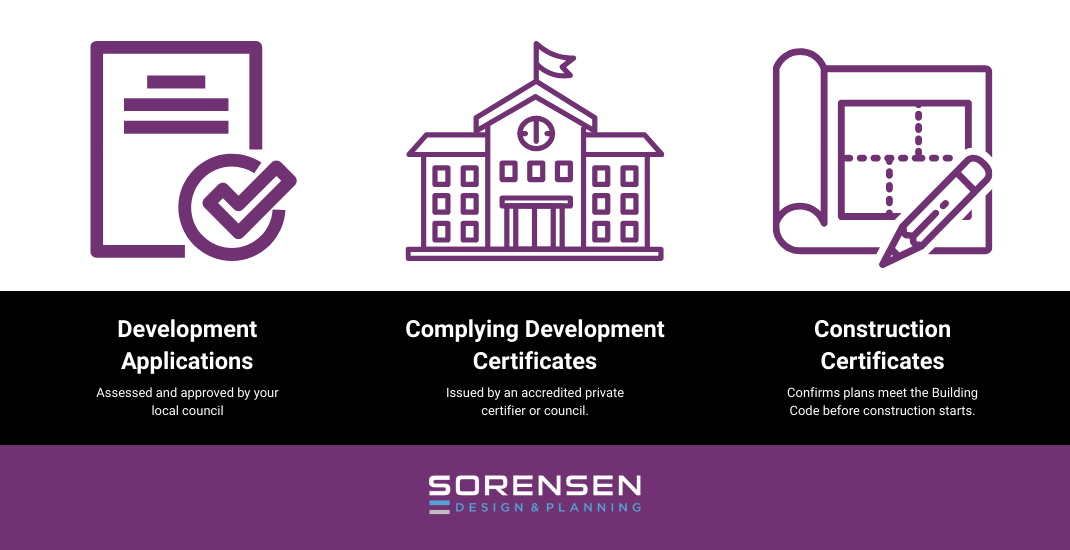
In NSW, there are several types of building approvals depending on your project’s size, location, and complexity. The main pathways are as follows.
Development Application (DA)
A DA is submitted to your local council to seek planning approval for new developments, renovations, or land use changes. It’s required for projects that don’t meet the criteria for exempt or complying development. We can prepare and lodge your DA, working closely with council planners to achieve approval.
Complying Development Certificate (CDC)
If your project meets specific standards for compliant development, you can bypass the full DA process. A CDC can be issued by either a private certifier or the council, significantly reducing approval time. This is common for smaller extensions, carports, and secondary dwellings.
Construction Certificate (CC)
After your DA or CDC is approved, you’ll need a Construction Certificate before starting any work. This confirms that the approved plans meet the Building Code and relevant technical standards. We handle all documentation, liaising with certifiers to ensure your plans are ready for construction.
By working with an experienced team, you can ensure every stage — from design to certification — runs smoothly, with no gaps in compliance.
How long does council approval take, and what affects timelines?
One of the most common questions we hear is: “How long does council approval take?”
The timeframe depends on your project type and the approval pathway:
- Development Applications typically take between 6–12 weeks, though complex projects can take up to six months, depending on what Council is assessing the DA.
- Complying Development Certificates can be approved much faster — often within 10–20 business days if all documents are complete.
Delays can occur if additional information is requested, such as environmental reports, drainage designs, or structural assessments. Factors like site conditions, boundary setbacks, heritage restrictions, and structural changes can all impact processing time and costs.
Our designers help clients prepare complete, accurate documentation to streamline council assessment and minimise delays.
Working with experienced building designers for a smoother approval process
Navigating building regulations can be challenging — especially if it’s your first renovation or new build. That’s where Sorensen Design & Planning makes a difference. Our team of building designers and town planning specialists assist with every stage of your approval journey. We can help you:
- Determine whether your project requires approval
- Prepare detailed building plans and documentation
- Lodge your Development Application (DA) with council
- Handle Complying Development (CDC) assessments through a private certifier
- Obtain your Construction Certificate (CC) to begin building.
Whether it’s a home renovation, dual occupancy, or commercial development, we’ll ensure your project complies with all relevant planning and building codes — from concept through to completion. We’re proud to deliver quality designs that balance functionality, style, and compliance. Our goal is to make your building journey as seamless and stress-free as possible.
Ready to start your project?
Understanding building regulations and council approvals is the first step toward a successful project. With the right guidance, you can avoid unnecessary costs, delays, and compliance issues.
If you’re planning a new home, renovation, or commercial building, get in touch with Sorensen Design & Planning today. We’ll help you determine what approvals you need and guide you through the entire process — from concept design to certification and construction.
Feature Image: Freepik